Lifelines
Editorial Strategy & Content Systems
Project Overview
Lifelines is the annual flagship publication of the MUSC College of Nursing — a multi-audience magazine that serves as the institution's primary long-form brand storytelling vehicle. When I took ownership of the publication, it lacked a defined editorial strategy, consistent visual identity, and a replicable production system. The content was gathered ad hoc, the design varied year over year, and the publication did not intentionally serve its five distinct audiences.
My goal was to transform Lifelines from a one-off annual project into a governed editorial system — with defined pillars, audience-mapped content architecture, a repeatable design framework, and a production workflow that could scale beyond a single person.
My Role
Editorial Director, Content Strategist, and Designer
Tools
Adobe InDesign, Illustrator, Photoshop and Asana
Target Audience
Prospective students, alumni, donors, faculty, and clinical partners.
The Challenge
What wasn't working
- No editorial framework — content decisions were reactive, not strategic
- Five distinct audiences (prospective students, alumni, donors, faculty, clinical partners) received the same undifferentiated content
- No repeatable design system — each issue required rebuilding layouts from scratch
- Content submission was unstructured, leading to last-minute scrambles and inconsistent quality
- No defined brand voice for the publication — tone shifted based on who submitted content
- The magazine was treated as a production task, not a strategic communications asset
Strategic Approach
Before any content or design decisions, I mapped each audience segment to their primary motivations for engaging with the publication: what they needed to feel, know, and do after reading Lifelines.
| Audience | Primary motivation | What content serves them | Desired action |
|---|---|---|---|
| Prospective students | Envision themselves at MUSC | Student success stories, program outcomes, campus life | Inquire or apply |
| Alumni | Stay connected, feel proud | Where-are-they-now profiles, research milestones, community impact | Donate, refer, advocate |
| Donors | See their investment's impact | Grant outcomes, scholarship recipient stories, research breakthroughs | Renew or increase giving |
| Faculty & staff | Feel recognized and seen | Research spotlights, faculty milestones, institutional achievements | Share externally, boost morale |
| Clinical partners | Validate their partnership | Clinical innovation, partnership outcomes, shared mission | Deepen institutional relationship |
Editorial pillars
With audience needs mapped, I defined four editorial pillars that structured every issue — ensuring each pillar served multiple audiences while maintaining a coherent publication identity.
01 — Student Stories
First-person narratives from current students and recent graduates. Humanizes the academic experience and directly serves prospective student recruitment goals.
02 — Research & Innovation
Faculty-led research spotlights, clinical breakthroughs, and grant-funded initiatives. Serves donors, clinical partners, and faculty recognition simultaneously.
03 — Community & Impact
Alumni profiles, community outreach, and partnership outcomes. Strengthens alumni identity and demonstrates institutional mission beyond the campus.
04 — Institutional Voice
Dean's message, program updates, awards, and accreditations. Establishes authority and provides the factual backbone that anchors the publication's credibility.
Content System & Governance
To move from reactive to proactive content production, I built an annual editorial calendar that worked backward from the print deadline — establishing clear milestones for story ideation, contributor outreach, draft submission, editorial review, and design handoff.
Brand voice guidelines
I developed a Lifelines brand voice guide that defined the publication's tone as distinct from the institution's general communications — warmer, more narrative-driven, and human-centered. The guide covered: tone principles, prohibited language, active vs. passive voice standards, headline writing conventions, and caption style.
Content templates & submission standards
Each editorial pillar had a corresponding contributor brief template specifying: word count range, required supporting materials (photos, bios, pull quotes), structural format, and audience intent. This eliminated the ad hoc scramble and gave contributors a clear framework that made editorial review significantly faster.
Design & Production Framework
I built a modular InDesign design system for Lifelines that established master templates, reusable layout components, and a defined typographic and color system — making the publication reproducible year over year without rebuilding from scratch.
Design system components
- Master page templates — cover, feature spread, sidebar, profile, and department page layouts with defined grids and margins
- Typography system — display typeface for headlines, serif body, and sans-serif for captions and callouts with defined size and leading scales
- Color palette — primary institutional palette extended with a secondary editorial palette for visual warmth and section differentiation
- Component library — pull quote styles, byline formats, photo caption treatments, section dividers, and statistical callout boxes
- Accessibility standards — minimum contrast ratios, alt text requirements for digital edition, and font size minimums enforced across all layouts
Results
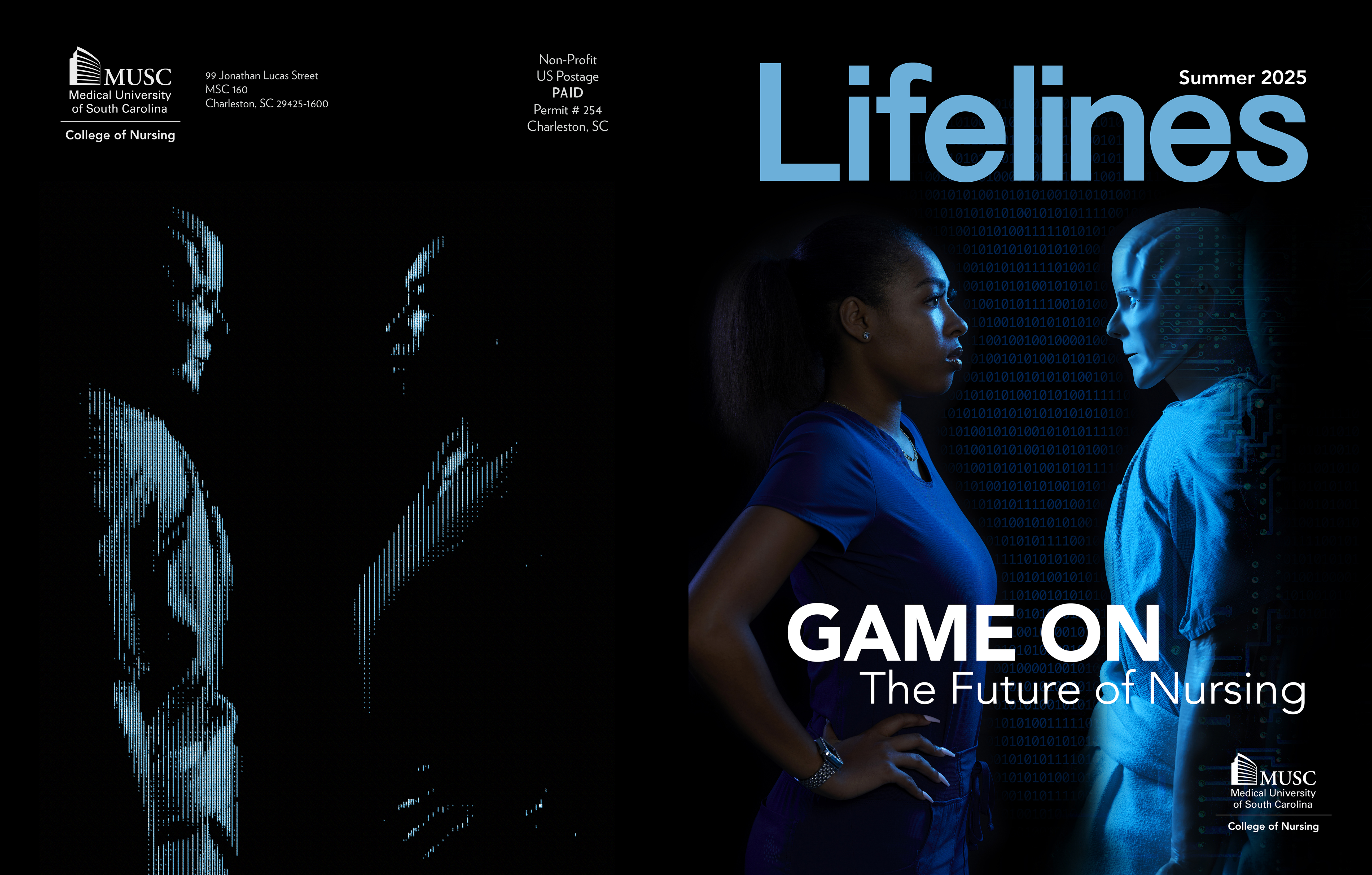
Lifelines became a strategic asset used actively by the enrollment team in prospective student outreach, by development officers in donor conversations, and by leadership in accreditation and partnership discussions. We moved from an annual production obligation to a year-round content system that surfaced stories across web, social, email, and print channels.
Key Takeaways
The most important insight from this project was that a publication's value isn't determined by its design or writing quality alone — it's determined by the clarity of its editorial strategy. Once I defined who Lifelines was for and what it needed to do for each audience, every subsequent decision — content selection, story framing, layout hierarchy, distribution channels — became straightforward.
Building a replicable system rather than a beautiful one-off was the other defining choice. The design system and editorial governance framework ensured that Lifelines could scale, adapt, and maintain quality regardless of who was executing it — which is the real measure of a content system's success.